
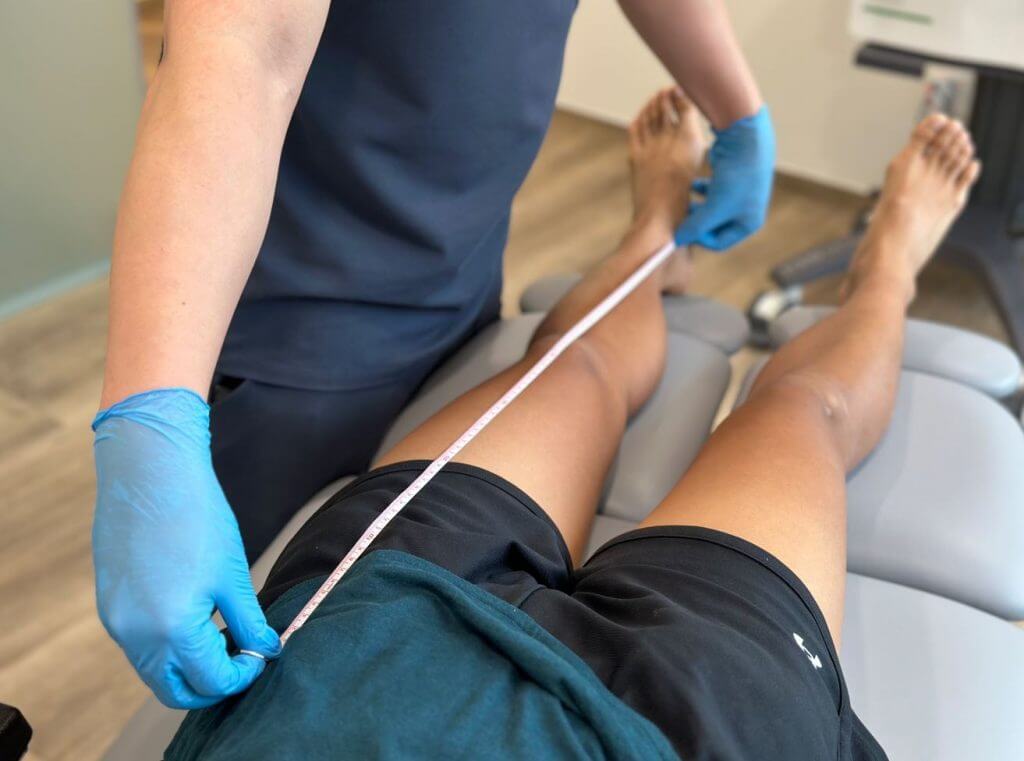
Leg length discrepancy is something we hear about all the time in physical therapy but not every “uneven leg” is actually a structural problem. In fact, most people who feel off-balance, tilted, or uneven are dealing with muscle tightness or alignment issues rather than a true difference in bone length.
Understanding the difference matters, because it completely changes how you treat it and whether you even need to worry at all.
What Is a True Leg Length Discrepancy?
A true leg length discrepancy (also called a structural discrepancy) means there is an actual difference in the length of your bones, typically the femur (thigh bone) or tibia (shin bone).
This can happen due to:
- Genetics
- Previous fractures or surgeries
- Growth plate injuries during childhood
In these cases, the difference is measurable and consistent. No matter how you move or position yourself, the length difference remains.
Common Signs of a True Discrepancy:
- One leg consistently measures longer than the other (lying flat)
- A noticeable pelvic tilt that doesn’t correct with movement
- Long-standing history of imbalance
- May require a heel lift or orthotic for correction
What Is a Functional (Muscle-Based) Leg Length Difference?
This is much more common and often misunderstood.
A functional leg length discrepancy happens when your muscles, joints, or posture create the appearance of one leg being longer than the other, even though your bones are equal in length.
This can be caused by:
- Tight hip flexors
- Tight hamstrings
- Pelvic rotation
- Muscle imbalances around the hips and lower back
In these cases, your body is essentially “pulling” your pelvis out of alignment, making one leg appear shorter or longer.
Common Signs of a Functional Issue:
- Leg length appears different when standing, but not when lying down
- Changes with movement or stretching
- Associated with tightness or stiffness (hips, low back, glutes)
- Often comes with pain or discomfort that varies day to day
How Do You Actually Measure Leg Length?
1. True (Structural) Leg Length Measurement
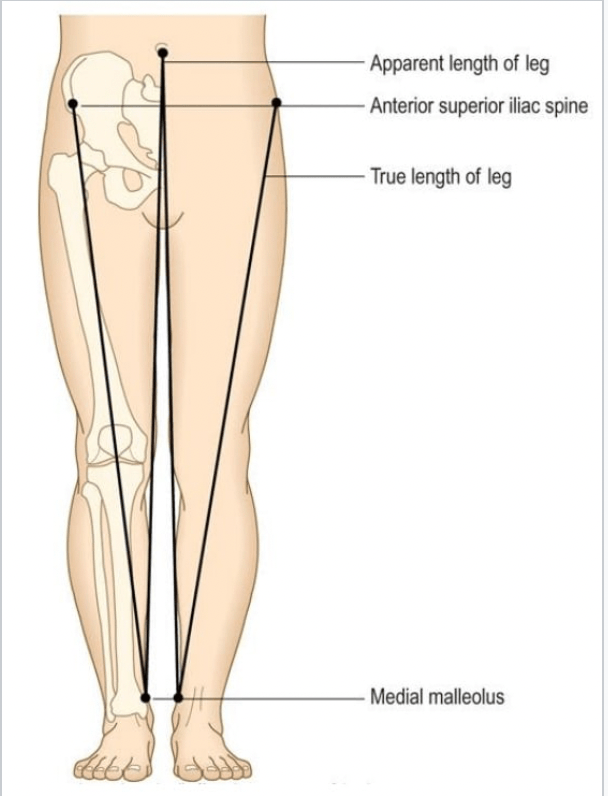
The most accepted clinical method is measuring from:
ASIS (anterior superior iliac spine) → medial malleolus (inside ankle bone)
This is commonly referred to as the true leg length measurement.
How it’s done:
- Patient lies flat on their back
- Pelvis is squared (no rotation)
- Tape measure is placed from the ASIS to the medial malleolus on each side
- Both sides are compared
If there is a consistent difference here, it suggests a true structural discrepancy.
Important note:
Even this method has limitations. Small pelvic rotations or positioning errors can throw off the measurement. That’s why experienced clinicians always combine this with other tests.
2. Apparent (Functional) Leg Length Measurement
This helps identify whether the issue is coming from pelvic alignment or muscle imbalance.
Measured from:
Umbilicus (belly button) → medial malleolus
If this measurement is different, but the true leg length is equal, it strongly suggests a functional issue (pelvic tilt, rotation, or muscle tightness).
3. Long Sitting Test (Quick Clinical Screen)
- Patient starts lying down, then sits up
- Therapist observes how the legs “shift”
If one leg appears to go from long → short (or vice versa), this is usually a functional/pelvic issue, not a true bone difference.
4. The Gold Standard (When It Really Matters)
If you need absolute confirmation, imaging is the most accurate method:
- X-ray or scanogram
- Provides exact bone length measurements
This is typically only necessary for larger discrepancies or surgical considerations.
The Key Difference
- True discrepancy = fixed
- Functional discrepancy = changeable
If the difference improves after stretching, manual therapy, or repositioning, it’s almost certainly a functional issue not a structural one.
If you have a leg length discrepancy that is giving you pain or impacting movement, Respire’s physical therapists can help you get back to the life you love. Call Respire Physical Therapy at the Falls Church Location (703-671-1871) or the Annandale Location (571-369-6728) to schedule an appointment with one of our skilled Physical Therapists today! Click here to request an appointment online and we will contact you as soon as possible.

Tags: washingtondc, health blog, pt education, choosept, movement is medicine, arlingtonva, evidence based practice, alexandriava, fallschurchva, Physical Therapy, ptworks, Respire Physical Therapy, Back pain, annandaleva, painfreeliving, physical therapist